
Let's start with the most common tension
One of you reaches for a lemon vibrator and immediately goes for pattern 5. The other person's nervous system goes into overdrive. Or the opposite happens. someone wants deep, sustained stimulation and the other keeps turning it down because "it feels like too much." Neither of you is wrong. Your bodies are just wired differently.
This is not a problem to solve. It's a conversation to have. And once you have it, lemon vibrators become the bridge between two different pleasure languages instead of a source of frustration.
Why pleasure preferences differ so much
It's not about love or desire. It's about nerve density, sensitivity thresholds, hormonal baselines, and personal history with sensation.
Some bodies are hypersensitive at rest and need gentle building time before they want intensity. Others are relatively numb until they hit a certain threshold, and then intensity is exactly what wakes them up. Both are normal. Both matter.
Clitoral nerve density varies wildly. Some people have concentrated clusters near the surface; others have nerves distributed more deeply. Someone with surface-dense nerve clusters might find a lemon vibrator at full intensity absolutely overwhelming. Someone with deeper nerve distribution might barely register it.
Then there's the psychological layer. If you've spent years having sex that felt obligatory or unsafe, your body might genuinely need gentleness to access pleasure again. If you've spent years numbed by medication or hormonal shifts, you might need intensity to feel anything at all. Neither preference is a judgment of your partner. It's just information about what you need.
The conversation that changes everything
Honestly though, most couples never actually name this stuff. You fumble around with a lemon vibrator, one person goes quiet, the other assumes it means "not interested," and suddenly it becomes this awkward thing that neither of you brings up.
Start here: separate pleasure preferences from partnership. "I need gentler stimulation" is not the same as "I don't want you." "I want more intense sensation" is not the same as "you're not enough." Say that out loud to each other.
Then get specific. Ask these questions when you're both clothed and calm.
What intensity level feels good to you when you're alone? What about when someone else is involved? Does the answer change? Do you like a slow buildup or do you prefer to start at a moderate level? How does your preference change across your cycle (if you menstruate) or with stress, medication, or time of day?
Write the answers down if it helps. This removes the pressure of remembering in the moment and gives you something to reference.
The practical bridge: one vibrator, multiple approaches
If you share a lemon vibrator, you don't need two different toys. You need two different protocols.
Start by learning each other's actual range. Sit together, take turns holding the vibrator on patterns 1 through 5 on yourselves for 30 seconds each. Narrate what you're feeling. "Pattern 1 feels like background hum. Pattern 3 is where I start to wake up. Pattern 5 is almost too much without buildup." This is not sexy, but it is incredibly useful. You're gathering data, not performing.
Once you know each person's range, you can customize the experience.
For the partner who prefers gentleness: use patterns 1-3, start with longer warm-up time (15-25 minutes), keep the vibrator moving around the broader clitoral area rather than staying in one spot, and consider using it through underwear or with a thin barrier first. Lemon clitoral vibrators are effective enough that indirect stimulation often does the job. You're creating a sustained, broad sensation rather than a sharp point of intensity.
For the partner who needs intensity: start with pattern 3-4, you can afford a shorter warm-up once arousal builds, direct contact to the most sensitive area, and sustained application. If two of you are together, this might mean one person uses the vibrator on themselves while the other partner provides other forms of touch and connection.
When you want to use it together
This is where most couples get stuck. How do you both pleasure yourselves when you want to be connected?
Answer: you don't have to mirror each other's approach. One of you can use the vibrator on yourself at your preferred intensity while your partner uses hands, mouth, or their own rhythm. You're in the same scene, but you're each following your own pleasure map.
If you want more direct partner involvement, you have options.
Take turns. One person uses the lemon vibrator on themselves at their preferred intensity while the other provides manual stimulation, kisses, or verbal encouragement. Then switch. This takes pressure off both of you to sync up.
Use it as foreplay for one partner. One person brings themselves close to orgasm with the vibrator at their preferred intensity while the other builds their own arousal separately. Then transition into partnered contact if that feels right. You're honoring both preferences in sequence instead of trying to solve them simultaneously.
Design a scene around the less-intense preference. Start with patterns 1-2, both partners touching and being touched, moving at the slower rhythm. Once someone reaches a plateau, they can bump up the intensity if they want to, while the other partner continues at their preferred level.
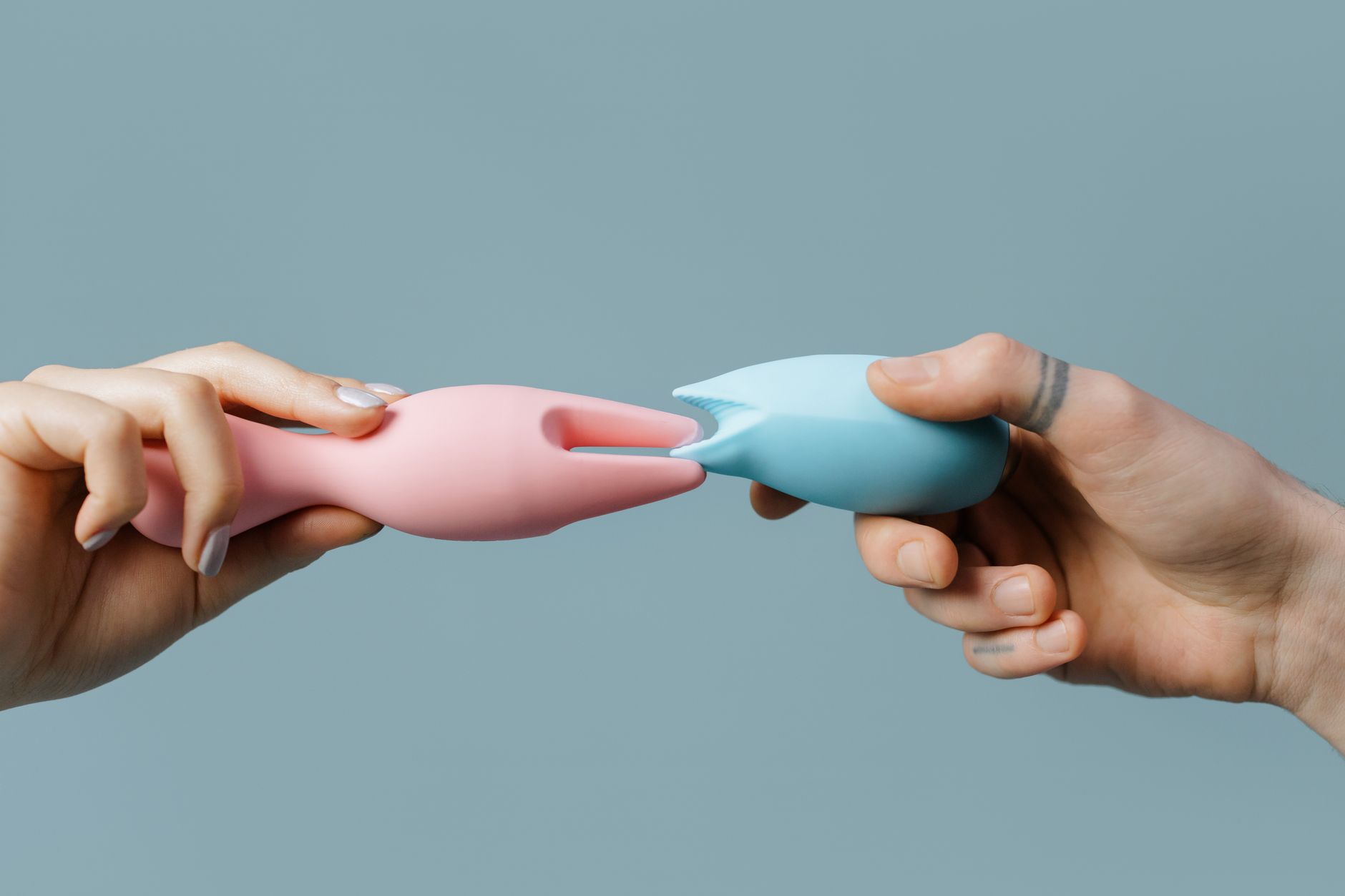
Photo by cottonbro studio on Pexels
The role of communication during the moment
Talking during sex feels weird at first. Do it anyway.
"Is this intensity working for you?" "Do you want me to change the pattern?" "Tell me if you want gentler or stronger." These aren't sexy lines, but they're the connective tissue that keeps both of you in the experience instead of one of you checking out.
Develop a simple system. You could use numbers ("I'm at a 6" means six out of ten comfort), colors (green equals good, yellow equals warming up, red equals back off), or just direct words. No codes needed. Just: "gentler" or "stronger" or "keep doing that."
If you're using a lemon vibrator on a partner, watch their body. Are they moving toward it or creating distance? Is their breath deepening or getting shallow? Does their pelvic floor look relaxed or tensed? These are real-time feedback signals.
Here's something that matters: if one partner is quieter or less obviously responsive, it doesn't mean it's not working. Some people are internally focused during pleasure. Some go nonverbal. Some stay still. Don't assume silence means discomfort unless they tell you it does.
When intensity mismatch signals something deeper
Sometimes a huge gap in pleasure preferences points to something worth investigating.
If one partner suddenly needs much more intensity than they used to, that could signal numbness from medication, hormonal shifts, or disconnection from their body due to stress or trauma. Worth mentioning to a doctor or therapist.
If one partner wants almost no stimulation, that might be a sign of anxiety, physical pain, or emotional distance in the relationship. Again, not a vibrator problem. A conversation problem.
If preferences are so mismatched that neither of you can find middle ground, relationship coaching can help you figure out what's actually going on. Sometimes it's about pleasure. Sometimes it's about feeling heard.
Building pleasure equity instead of pleasure sameness
Here's what I know from years of working with couples: the couples who navigate preference differences best aren't the ones with identical desires. They're the ones who've decided that different preferences are valuable information, not obstacles.
One partner's need for gentleness teaches the other how to slow down and build anticipation. One partner's need for intensity teaches the other what deep arousal feels like. You're not supposed to want the exact same thing. You're supposed to become more generous with each other because of the differences.
A lemon vibrator is just a tool. The real work is building a conversation where both of you can name what you need without shame, adjust the approach without resentment, and trust that different doesn't mean distant.
If you're in the early stages of exploring this together, how to use lemon vibrators when you want clitoral stimulation without direct contact offers another angle for bridging preferences. And if the preference gap feels tied to deeper relationship tension, how to use lemon vibrators when intimacy feels stilted or performative walks through reconnecting when something feels off.
The goal isn't to solve your differences. It's to stop treating them as problems.
Frequently asked questions
Can we use the same lemon vibrator if we have totally different sensitivity levels?
Absolutely. The same vibrator on patterns 1-2 feels completely different from patterns 4-5. One of you might need the gentle range while the other needs the intense range. As long as you're cleaning between use and being honest about what works, one clitoral vibrator can serve multiple pleasure profiles.
What if my partner thinks their preference is the "right" way and mine is weird?
That's a values conversation, not a preference conversation. Everyone's pleasure is equally valid. If a partner is making you feel ashamed of what you need, that's not a vibrator problem. That's a respect problem. You might benefit from speaking with a relationship coach who specializes in sexual dynamics and communication.
How do we avoid one person feeling left out during partnered use?
Stay in eye contact and touch. If one of you is using a lemon vibrator on yourself, the other person can be kissing your neck, holding your hand, or talking to you. You're not alone just because you're not in direct contact. Presence matters more than position.
Is it normal for preferences to change over time?
Completely. Sensitivity shifts with hormones, stress, medication, age, and how connected you feel to your partner. Someone who needed intensity last year might need gentleness this year. Check in regularly instead of assuming preferences are permanent.
What if one of us wants to use a lemon vibrator and the other doesn't want anything?
That's fine. One person can explore sensation while the other provides emotional presence, physical touch, or just their company. Not every intimate moment requires the same level of stimulation or even arousal from both partners. Pleasure doesn't have to be symmetrical to be connected.
How do we talk about this without it feeling clinical or awkward?
Start clothed. Start calm. Start curious instead of defensive. "I've noticed we seem to want different things. I want to understand what you're actually needing so we can figure this out together." That's it. You're not solving, you're listening. The awkwardness fades fast once someone feels genuinely heard.
The bottom line
Partners with different pleasure preferences aren't broken. They're just getting honest about what they actually need. Use lemon vibrators as a tool to bridge those preferences, not as something that has to feel the same for both of you. The couples who navigate this best are the ones who stop trying to want the same thing and start asking how to honor both preferences in the same moment.
If you want to explore how preference differences show up in other contexts, check out how to use lemon vibrators when partners want different intensities of stimulation for deeper strategies on intensity specifically. Or, if the preference gap is connected to mismatched desire overall, how to use lemon vibrators when pleasure returns after a long relationship break explores reigniting connection when timelines don't match.
Your differences are not a flaw. They're an invitation to become a better lover.