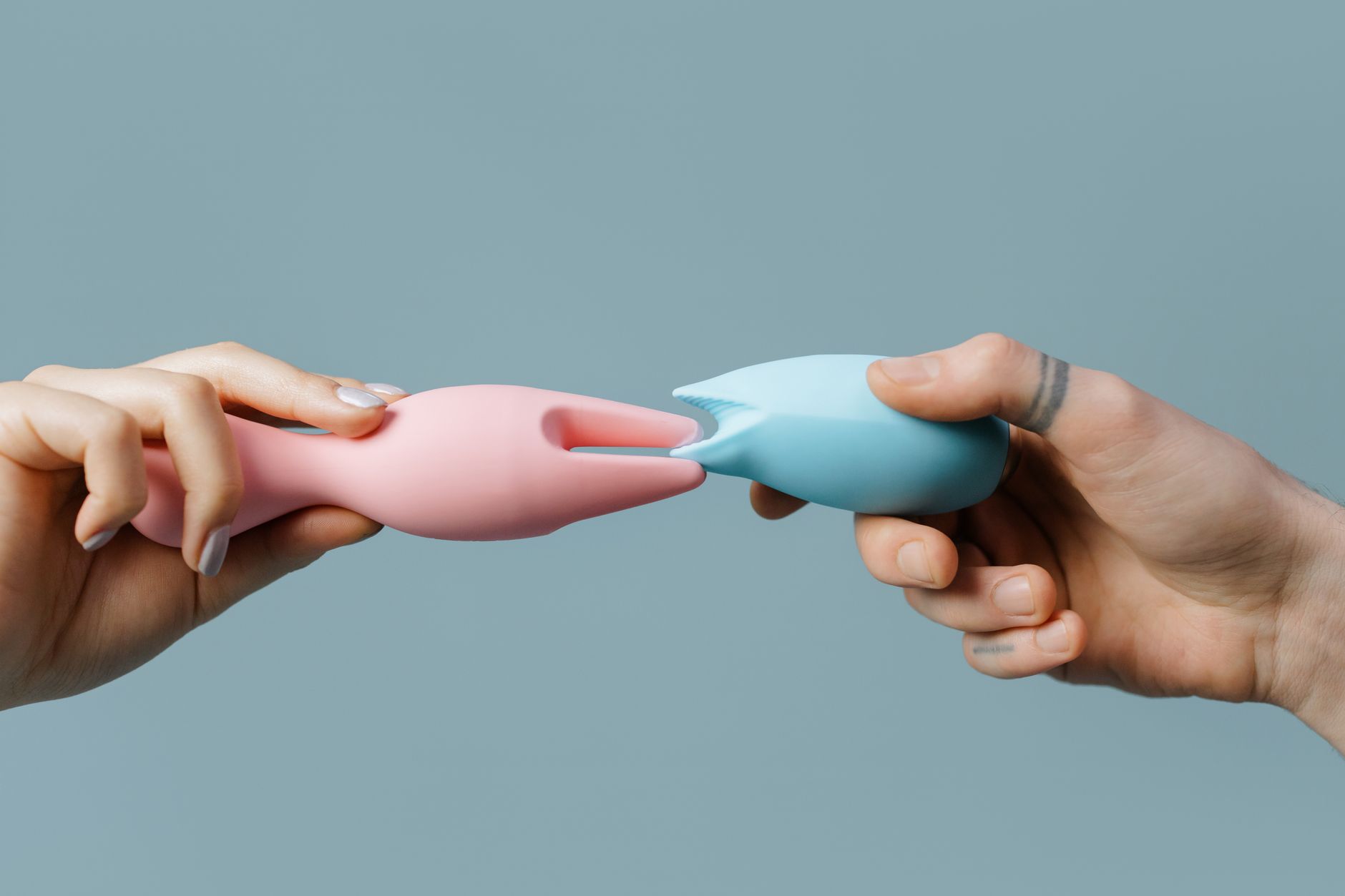
Here's what nobody says about desire mismatch
One of you wants sex three times a week. The other is happy with twice a month. You're not incompatible. You're not broken. You're also not alone. Somewhere between 15 and 30 percent of long-term couples report significant desire differences, and most of them stay together anyway because the rest of the relationship works.
The problem isn't the mismatch itself. It's what happens next: resentment builds when the higher-desire partner waits for the lower-desire partner to initiate, and nothing changes because the lower-desire partner isn't feeling the pressure that would spark spontaneity.
That's where clitoral vibrators enter the picture. Not as a substitute for your partner, but as a release valve for frustrated desire that has nowhere to go.
Why this matters more than you think
When you're the person who wants sex more often, something insidious happens. You start managing your own desire around your partner's capacity. You stop asking. You dampen your own arousal to avoid rejection. You tell yourself it's fine, you're being patient, you're being understanding.
Yet slowly, that patience curdles. You begin to resent your partner for not wanting you the way you want them. You resent yourself for shrinking. The sex you do have becomes shadowed by the sex you're not having, and eventually, even those moments feel tainted by months of unmet longing.
Lemon vibrators disrupt that cycle. When you have an independent source of physical release that doesn't depend on your partner's mood or schedule, something shifts. The pressure lifts. You stop performing patience. You stop keeping score. And paradoxically, sometimes your partner notices the difference and wants you more often, not because you're asking, but because you've stopped needing them to validate your sexuality.
The three types of desire mismatch (and what each needs)
Type 1: You want sex more often, but your partner doesn't need it as frequently. This is the most common one. One of you is content every other week; the other needs release twice a week. A lemon clitoral vibrator handles the gap without making anyone feel deficient.
Type 2: Your partner wants sex, but only at certain times or in certain ways. They're interested in penetration but not foreplay, or they want sex only at night, never mornings. Here, lemon vibrators give you access to pleasure that matches your actual desires, not a watered-down version of theirs.
Type 3: Desire disappeared after a life transition. A child was born, someone got stressed, depression crept in. One person's libido flatlined while the other's remained steady. This one often responds to couples therapy plus individual pleasure reclamation through clitoral stimulation. A Lemon Clitoral Vibrator can be part of rebuilding your sense of yourself as a sexual being independent of your partner's current capacity.
How to talk about it without triggering shame
The conversation about desire mismatch is the conversation that most couples avoid, which is exactly why it festers.
Here's what doesn't work: "You never want to have sex" or "You always want sex and it's exhausting." Both are attacks dressed as observations.
What works is specificity plus curiosity. "I've noticed I feel most satisfied when we have sex about twice a week, and I'm sensing that doesn't match where you're at right now. I want to understand what's driving that for you. And I want to talk about how I can meet my own needs in a way that doesn't pressure you."
That last part is crucial. When you introduce the idea of solo pleasure as a solution rather than a threat, the conversation changes. You're not saying "your lack of desire is my problem now." You're saying "I value my own sexuality and I'm not going to let it atrophy while we figure this out together."
From there, you can name the tool. "I'm thinking about using a lemon vibrator for solo play. I wanted you to know because I respect our relationship and I don't want this to feel like a secret." Some partners are relieved. Some want to participate. Some need time to adjust. All of those reactions are normal.
Using a clitoral vibrator when desire is complicated
Start solo first. The goal of your first few sessions isn't to "figure out" what you like (you probably already know). It's to reclaim the sensations of pleasure without the weight of unmet expectations. No partner watching, no hoping they'll be interested, no negotiating intensity. Just you, a lemon vibrator, and the simple experience of physical pleasure on your own terms.
Find a rhythm that's separate from your relationship. If you both have Tuesday and Thursday mornings free, make those explicitly yours. This isn't about hiding. It's about creating a structure where your pleasure doesn't depend on your partner's availability. Some people use lemon vibrators right before bed as a wind-down ritual. Others schedule them in the shower. The specificity matters because it removes the decision fatigue.
Notice what changes. After a few weeks of regular solo play with a clitoral vibrator, check in with yourself. Do you feel more or less resentful toward your partner? More or less interested in shared sex? More confident in your own body? The honest answer to that question is worth discussing with your partner because it's not theoretical anymore. It's your actual experience.
When to invite your partner in (and when not to)
Some couples find that solo play is enough. The higher-desire partner gets regular release, the pressure lifts, and the partnered sex they do have feels better because it's wanted, not obligatory.
Other couples discover that watching each other use a lemon vibrator becomes its own form of intimacy. Still others find that a lemon clitoral vibrator becomes a bridge during partnered sex. When your partner isn't naturally reaching the edge with their preferred stimulation, a vibrator means both of you can finish satisfied without anyone contorting into positions that don't work.
The key is: this is a separate choice from solo use. You don't owe your partner access to your solo pleasure. And they don't owe you enthusiasm about it. If you've said "I'm using this for myself" and they're comfortable with that, then introducing them becomes an optional next step, not a negotiation.
When you do invite them, keep it low-pressure. "I want to explore this together sometime" is different from "You need to watch me." And if they decline? That's information worth sitting with, either in conversation or in couples therapy, but it's not a referendum on the relationship.
The pleasure-independence paradox
Here's what I've seen repeatedly in my practice: the moment someone with higher desire stops waiting for their partner to meet them, the dynamic often shifts. Not always, but often enough to matter.
You become less resentful because you're not drowning in unmet need. You have an outlet. You feel more like yourself. And paradoxically, your partner often finds you more attractive when you're not radiating frustration or resignation.
Lemon vibrators don't solve desire mismatch. What they do is interrupt the shame spiral that usually accompanies it. They say: your sexuality is valid, your pleasure matters, and you don't have to choose between respecting your partner's boundaries and respecting your own body.
If the mismatch is severe or worsening, clitoral vibrators plus solo pleasure might not be enough. A couples therapist trained in sexual function can help you navigate whether the mismatch is about low libido, emotional distance, a medical issue, or something else entirely. When you start reclaiming your own pleasure, you're in a better position to be honest about whether the relationship itself needs repair.
Managing the solo-plus-partnered balance
One practical thing: be intentional about not letting solo play become a substitute for the conversation you actually need to have.
A lemon vibrator can't fix emotional distance. It can't address a partner's lower libido if that's rooted in depression, medication side effects, or past trauma. It can't resolve fundamental incompatibility about what sex means or how often it should happen.
What it can do is buy you space and relief while you figure out what needs fixing. Use that space. Talk to your partner. Consider therapy. Decide what you're willing to accept and what you're not.
For many couples, the compromise looks like this: the higher-desire partner has regular solo pleasure with a lemon clitoral vibrator, and the couple also schedules intentional partnered sex even when spontaneous desire doesn't match. No one's waiting. No one's resentful. There's a rhythm that works for both of you.
FAQ: When desire doesn't match
Can using a vibrator make my partner feel like I'm rejecting them?
Possibly, if you're secretive about it or if they're already insecure about the desire mismatch. That's why the conversation matters. A partner who understands that you're using a lemon vibrator to meet your own needs, not because you're dissatisfied with them, usually feels relieved rather than threatened. The secrecy is what triggers defensiveness.
What if my partner feels pressured to perform or compete with a vibrator?
This is real, and it requires gentleness. Reassure them that a clitoral vibrator isn't a replacement for partnered sex. It's a complement to solo pleasure. The goal isn't for you to never want them. It's for you to not resent them when the timing doesn't align. That's a conversation worth having explicitly.
Is it normal for desire to be this different?
Yes. Studies suggest that about half of long-term couples experience some degree of desire mismatch. It's one of the most common sexual concerns in therapy. You're not weird, and your relationship isn't broken just because your libidos don't sync.
How often should I use a vibrator if my partner initiates less often?
That's entirely up to you. Some people use a lemon vibrator daily. Others weekly. The only guideline is: whatever frequency feels good and doesn't interfere with partnered sex when it does happen. If you're masturbating so much that you're unavailable when your partner wants sex, that's worth examining. Otherwise, your solo pleasure is yours.
Will this eventually lead to my partner wanting more sex?
Maybe. Some partners feel more interested when the pressure lifts. Others' lower libido is rooted in something independent of your frustration (depression, medication, low testosterone) and won't change just because you're happier. Use a lemon vibrator because it serves you, not as a strategy to change your partner.
What if the desire mismatch is really severe?
If you want sex multiple times a week and your partner wants it once a month or less, that's worth exploring with a therapist. Solo pleasure can address the immediate physical need, but the emotional weight of that kind of mismatch usually requires professional support to untangle. A couples therapist can help you both understand what's driving the difference and whether the relationship can accommodate it.
The bottom line
Your desire is not a problem that your partner needs to fix. Your pleasure is not dependent on their libido. When you stop waiting for someone else to validate your sexuality and start honoring it yourself, something shifts. You become less resentful, more confident, and paradoxically, often more attractive to your partner. A lemon vibrator is a practical tool for that reclamation. Use it, talk about it, and let it be part of how you rebuild independence within your relationship.
If you need support navigating this conversation with your partner or working through deeper questions about your relationship, reach out. Contact The Lemon Massagers for resources and guidance.